

Table of Contents
Official Ontario Tenancy Agreement Online
- Official tenancy agreement
- Draft official lease forms
- Share with tenants remotely for signature
- Sign the lease online
- Monitor the signing process
- Download certificate of completion
Renting out a unit without a properly completed tenancy agreement is a common source of conflict between tenants and landlords. Both parties expect their terms to be clearly documented. Details like who pays for each utility, when the rent is due, and who is responsible for snow removal or minor repairs must all be included in your Ontario tenancy agreement.
Today, we’re breaking down the most common mistakes in Ontario lease agreements, in plain language, and how you can avoid them.
Ontario Tenancy Agreement
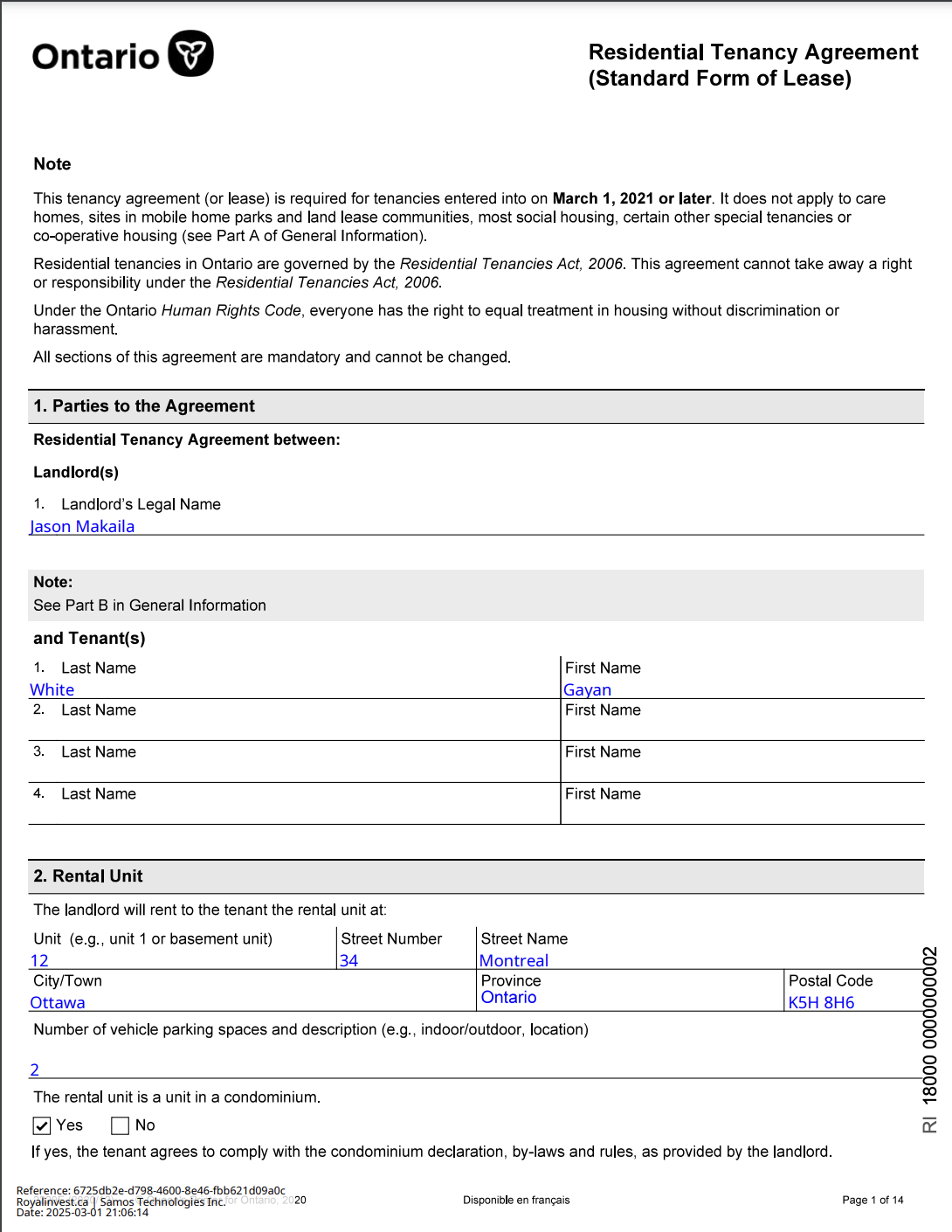
Ontario uses a standard Ontario tenancy agreement lease form introduced by the government. It is mandatory for most private residential tenancies signed on or after April 30, 2018. That standard form sets out the main terms that cannot be removed or changed. It also leaves space for a few additions. The purpose of the lease agreement is to mark clearly the legal relationships between a landlord and a tenant. If your rental situation is outside the prescribed class (e.g. certain care homes, some types of social housing, and specific land-lease communities), different rules can apply. However, for most houses, condos, apartments and secondary units the standard lease is the required form.
Landlord Rights and Responsibilities
As a landlord you have both rights and duties. The right most landlords have is to collect rent every month. You also have the right to enter the rental unit in certain situations. However, entry is regulated so that tenants’ privacy is protected. Specifically, entry is generally allowed between 8 a.m. and 8 p.m. when the landlord has given written notice at least 24 hours in advance and specified the reason, date and time. Emergency situations are an exception. Once there is an immediate emergency the landlord may enter without notice to prevent harm or property damage. These entry rules are grounded in the RTA and interpreted by the Landlord and Tenant Board.
Maintenance is another obligation. The unit must meet basic health, safety and maintenance standards for the duration of the tenancy. This includes ensuring the heating works, locks are secure, and the building’s structural elements are safe. If a landlord fails to maintain the property, tenants can apply to the Landlord and Tenant Board for orders requiring repairs or rent abatements.
Tenant Rights and Responsibilities
Ontario law protects the tenant, starting with the right to “quiet enjoyment.” That phrase means a tenant should be able to live in the unit without unreasonable interference from the landlord. It covers things like frequent or unnecessary disruptions, or entry without proper notice. Tenants also have the right to leave in a unit that meets health and safety standards.
Whereas their responsibilities include paying rent on time and keeping the rental unit clean. They must avoid damaging the property. When repairs are needed, tenants should report them promptly in writing and keep copies of the communication. If a landlord does not make necessary repairs on time, the tenant can apply to the Landlord and Tenant Board to solve the issue.
Tenants should also know what they can refuse. Illegal fees or demands, clauses that attempt to override the RTA are clauses that tenants can refuse. If a landlord tries to enforce an illegal clause tenants can solve it through the Board or through legal advice services.
The Most Common Mistakes and How to Avoid Them
Many disputes start with simple, yet avoidable errors. The first common mistake is using an outdated or custom lease that doesn’t include required standard terms. A lease that doesn’t follow the government’s standard form can cause trouble for both parties. Moreover, your tenants can request the lease agreement copy if they weren’t given it. If a landlord refuses to give the Ontario tenancy agreement within 21 days of a tenant’s written request, the tenant has law protections. To avoid this issue, always start with the official standard lease or use a digital service such as royalinvest.ca to draft, sign and track your Ontario tenancy agreement.
A second frequent error is adding vague rules. Clauses such as “no overnight guests” or complex, one-sided fines can’t be included in the lease agreement. It is always better to write the Ontario lease agreement clauses in simple language, mention reasonable rules that describe expected behavior. You also should avoid monetary penalties that aren’t legally permitted. If you want to regulate pets, think about a reasonable pet policy that explains expectations around damage, cleaning and noise.
Third, record keeping is often overviewed. Sometimes, landlords don’t provide receipts, and tenants don’t document move-in and move-out conditions. These are small steps that can significantly reduce the risk of later disputes about unit conditions or payments.
Finally, many people can’t handle the end of a tenancy. You need to follow the proper notice formats and timelines required by law, whether you are a tenant or a landlord. If you negotiate a mutual termination, put it in the lease agreement. If a tenant breaks a lease early, responsibilities often involve paying rent until a new tenant is found or until the tenancy term ends, unless the landlord agrees otherwise. Think about changes as a formal event and document everything.
Official Ontario Tenancy Agreement Online
- Official tenancy agreement
- Draft official lease forms
- Share with tenants remotely for signature
- Sign the lease online
- Monitor the signing process
- Download certificate of completion
Breaking or Ending a Tenancy Agreement in Ontario
Ending an Ontario tenancy agreement can happen in several ways, and the legal approach depends on who initiates it and why. Tenants can end a tenancy by giving the proper written notice at the right time. Month-to-month tenants normally give a standard period of notice based on the rental cycle. If a tenant wishes to break a fixed-term lease early, they need to negotiate a mutual termination with the landlord. If There are serious grounds for lease agreement termination, tenant can apply to the Landlord and Tenant Board for an order to end the tenancy.
Landlords seeking to end a tenancy must follow strict statutory grounds and notice rules. Grounds for lawful termination include non-payment of rent, substantial damage to the property, persistent illegal activity by the tenant, or the landlord’s own legitimate need for the unit in certain circumstances (for example, to move in a close family member or to extensively renovate). Because these actions involve legal notices and potential Board hearings, landlords should follow statutory procedures precisely to avoid claims of illegal eviction.
In both cases, documentation matters. Keep written notices, use the correct Board forms where applicable, and consider legal advice when the reason for ending a tenancy is contested.
Practical checklist: quick steps to avoid problems
- Before signing an Ontario tenancy agreement, ensure you are using the right form confirmed by RTA.
- Always complete and sign the form properly and give each party a dated copy.
- Document the move-in condition with photos and a signed checklist.
- Provide receipts and keep copies when collecting payment.
- For any additional rules (parking, storage, pets), write clear, reasonable terms that don’t violate rules.
- Use online platforms, such as royalinvest.ca to ensure your lease agreement is up to date and is stored securely.
How Royalinvets.ca Can Help
Royalinvest.ca suggests a practical solution for avoiding many of these mistakes. It is designed specifically to simplify Ontario tenancy agreements. With royalinvest.ca, landlords can create Official Ontario tenancy agreement, customize it with clear and legally compliant clauses, share with tenants and sign everything digitally. Landlords can also track the signing process, so that they are always aware on which signing stage their agreement is. The platform also provides secure storage, so agreements are always easy to access.
As for tenants, once you share the agreement with them, they can ask for some refinements through the platform.
Tenancy agreements in Ontario protect both landlords and tenants, but only when they are written correctly, signed properly, and stored securely. Many disputes come from small mistakes that could easily be avoided with the right tools. By understanding your rights, responsibilities, and the common pitfalls, you can prevent costly conflicts and enjoy a smoother rental experience.
Start drafting your Ontario tenancy agreement today with Royalinvest.ca. Save time, reduce disputes, and keep your agreements safe and compliant.





Leave a Reply