

Table of Contents
The Quebec lease agreement has been updated, and the changes go beyond simple wording. From stricter notice requirements to expanded tenant protections, Quebec new lease agreement introduces meaningful updates that directly impact how landlords manage leases and communicate with tenants.
These changes are designed to improve clarity, strengthen legal compliance, and reduce misunderstandings on both sides of the agreement.
Below, we break down the updates of Quebec new lease agreement section by section, using the exact structure of the lease, so you can clearly see what has changed, what was added, and why it matters.
Notice of modification of the lease
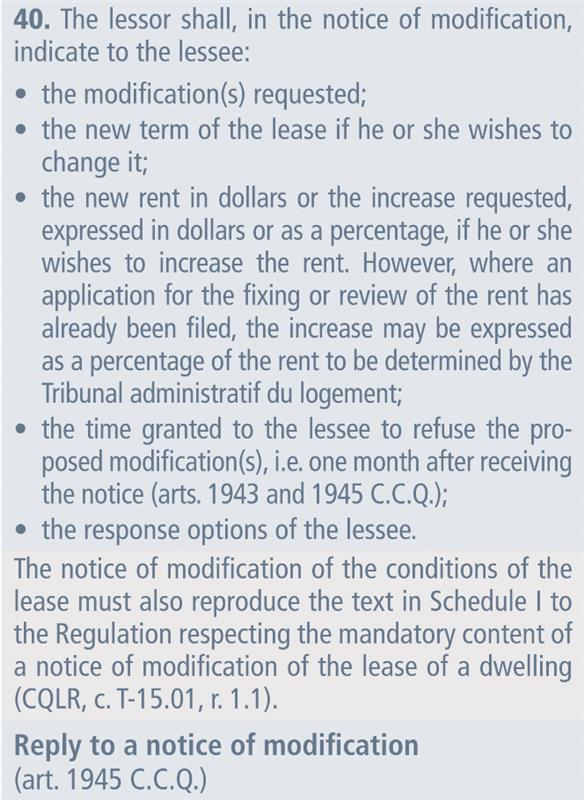
This section has been updated to make lease modification notices more structured and legally complete. The notice must now clearly include the response options available to the lessee, ensuring that tenants understand exactly how they can react to a proposed change. In addition, there is now a requirement to reproduce the content of “Schedule I” directly within the notice.
This change brings clarity to Quebec new lease agreement. Tenants no longer need to search for their rights or guess their next steps, while landlords benefit from a standardized format that reduces the risk of sending an invalid or incomplete notice.
Restrictions on the right to have the rent fixed and the lease modified
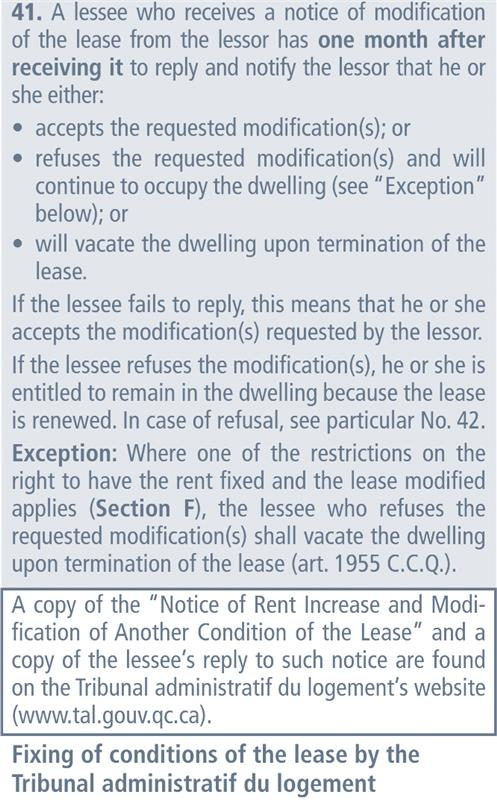
The wording in this section has been updated to better match the rules that apply to rent increases and lease changes. Before, it mainly referred to a few specific conditions or checkboxes, which could be confusing or too limited. Now, it explains the restrictions in a broader and clearer way, and it also connects more directly to other parts of the lease (e.g. Section F).
This change makes the section easier to understand and use in real situations. Instead of looking at it as a separate rule, it now fits better within the full set of lease regulations. As a result, landlords and tenants are less likely to misunderstand how the rules apply, and there is a lower risk of mistakes when handling rent changes or lease modifications.
Section G: Notice to a new lessee or a sublessee
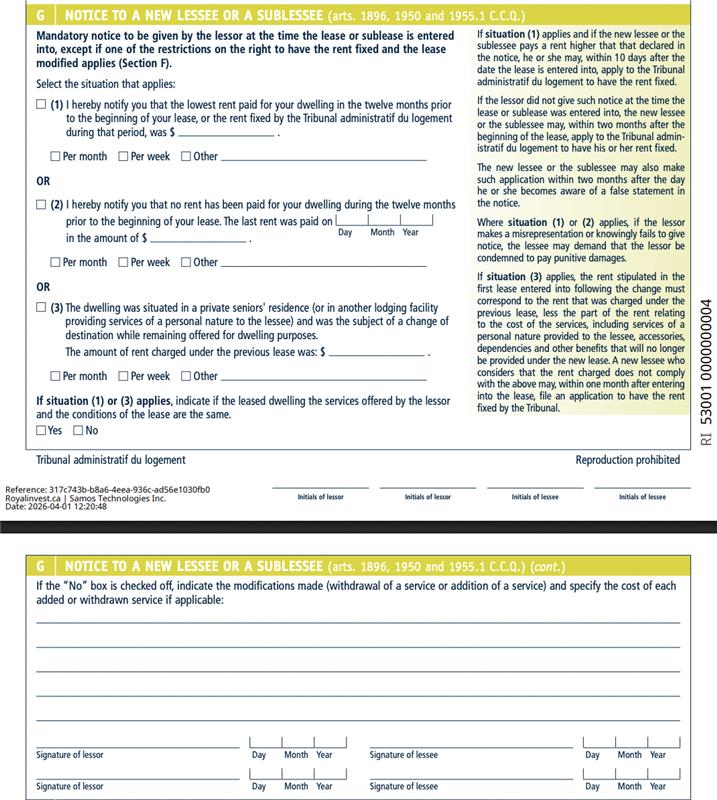
This section has been expanded. It now includes clearer fields for identifying changes in rent, services, and conditions. Landlords are expected to specify what has been added, removed, or modified compared to the prior lease.
This section adds transparency. New tenants can immediately understand what they agree to and how it differs from the previous arrangement. This reduces the likelihood of disputes and builds trust from the outset of tenancy.
Section I: Notice of a family residence
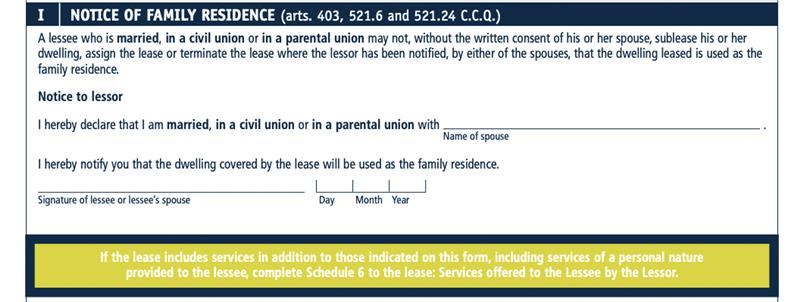
An important addition in this section is the inclusion of parental unions as a recognized family situation. Previously, the lease focused primarily on marriage and civil unions.
By expanding this definition, the lease now reflects a broader range of real-life family arrangements. This ensures that more tenants are protected under the rules governing family residences, particularly in situations involving shared housing rights.
General Information & Additional Provisions
One of the most important updates in the new lease is the addition and expansion of the sections of General information. This section provides a much clearer explanation of how the lease works and what both parties are responsible for.
The General information section outlines the legal nature of the agreement, explains the obligations of both the lessor and the lessee, and references the relevant rules from the Civil Code of Québec. Instead of being just a contract, the lease now also acts as a practical guide that helps both landlords and tenants understand their roles from the start. This reduces the risk of errors for landlords and gives tenants better clarity about their rights.
Moreover, the section goes further by explaining key legal rules in more detail, especially when it comes to rent. It clearly outlines how rent can be set or adjusted, the deadlines for contesting it, and what happens if incorrect or false information is provided. It also explains the options available to tenants if issues arise, including possible compensation. By making these timelines and consequences clearer, the lease helps prevent disputes before they happen.
In addition, it provides guidance on real-life scenarios that often cause confusion. This includes situations such as the death of a lessee, a change of landlord after a property sale, the application of building rules, the condition of the dwelling, and certain cases where a lease can be terminated early. By explaining these situations more clearly, the lease reduces uncertainty and helps both parties understand what to do if something unexpected happens.
Simplify Lease Management with RoyalInvest.ca
Keeping up with lease updates, legal requirements, and proper documentation can quickly become overwhelming, especially as regulations evolve. This is where having the right tools makes a real difference.
Royalinvest.ca helps landlords and property managers handle lease agreements with confidence. From drafting compliant Quebec lease agreements to sharing them for signature and tracking the entire process, everything is designed to be simple and efficient.
Instead of worrying about missing required clauses or sending incomplete documents, you can rely on a structured workflow that aligns with the latest requirements. This not only saves time but also reduces the risk of errors and disputes.
As lease regulations continue to change, using a platform that keeps everything organized and up to date allows you to focus less on paperwork, and more on managing your properties.
Also, read:




Leave a Reply