

Table of Contents
Online Rent Collection Made Simple
- Set up rent payments
- Invite tenants
- Collect payments online
- Get paid to your bank account
- Monitor every transaction
Security is not the first thing most landlords think about when setting up their rent collection process. But it should be near the top of the list. Every month, landlords and tenants exchange sensitive financial information, bank account numbers, routing numbers, and large sums of money. The method used to conduct that exchange determines how exposed both parties are to fraud, theft, data breaches, and payment disputes.
This guide covers the security landscape of landlord rent collection in practical terms: what risks exist, how modern digital systems address them, and what both landlords and tenants should insist on when evaluating payment methods.
Where Traditional Rent Collection Fails On Security
The risks of cash, checks, and money orders are often underestimated because they feel familiar. But familiarity is not the same as safety.
- Cash transactions leave no automatic record, creating a word-against-word environment when disputes arise. Physical currency can be stolen in transit, whether a tenant is carrying it to a landlord or a landlord is transporting it to a bank. There is no fraud detection, no reversal mechanism, and no audit trail.
- Checks carry a different set of risks. A check contains both the tenant’s account number and routing number printed directly on it. Intercepted or stolen checks can be altered or used to initiate unauthorized withdrawals. Bounced checks leave the landlord exposed to NSF fees and delayed income, while the tenant risks a late fee and a damaged rental record.
- Money orders are more secure than cash or checks but still require physical handling, can be lost or stolen, and become difficult to replace without proper documentation. None of these methods offer encryption, fraud detection, or identity verification.
For landlord rent collection at scale, these vulnerabilities are not theoretical. They are operational liabilities.
How Digital Platforms Secure Landlord Rent Collection
Modern online rent collection platforms are built with security at their core. Instead of relying on paper records and manual payments, they use encrypted transactions, identity verification, fraud monitoring, and automated payment tracking to protect both landlords and tenants throughout the payment process.
Encryption: The Foundation of Payment Security
Some online rent collection platforms use 256-bit SSL encryption, the same standard used by banks and major e-commerce companies. It protects data while it moves between devices and while it is stored on servers, making intercepted data unreadable without a decryption key.
Many platforms also use tokenization. Instead of storing a tenant’s real bank account number, the system stores a random token. If the database is breached, attackers see useless tokens instead of financial data.
Multi-Factor Authentication
Other rent collection platforms require multi-factor authentication (MFA). Users log in with both a password and a one-time code sent to their phone or email. This helps prevent unauthorized access even if a password is stolen.
For landlords handling rental income, MFA should be considered a basic security requirement.
PCI DSS Compliance for Card Payments
Platforms that accept credit or debit cards must follow PCI DSS security standards created by Visa, Mastercard, and other major card networks. Compliance includes security audits, vulnerability scans, and strict access controls.
Fraud Detection and Anomaly Monitoring
Modern payment platforms use automated systems to detect suspicious activity, such as unusually large transfers, logins from unfamiliar locations, repeated failed login attempts, or sudden account changes before payment.
When unusual activity is detected, the platform can request extra verification or temporarily freeze the transaction for review.
This level of protection is impossible with manual, paper-based rent collection, which cannot monitor transactions in real time.
Security Risks In Popular Apps: What Landlords And Tenants Need To Know
Peer-to-peer payment apps, such as Venmo, Zelle, Cash App, PayPal, are widely used for rent because they are convenient and familiar. But they were not built for recurring residential rent transactions, and their security architecture reflects that.
Venmo’s social feed is a notable concern. By default, Venmo transactions are publicly visible, displaying the sender, recipient, and a memo field. A tenant paying rent may inadvertently broadcast their payment to their network. While settings can be changed to private, most users never adjust the default.
Zelle offers bank-to-bank transfers that are generally secure, but its dispute resolution is limited. Unlike credit card transactions, Zelle payments are not covered by standard consumer fraud protections once sent. If a tenant sends rent to the wrong account number, recovery is not guaranteed.
For genuine landlord rent collection security, purpose-built platforms designed for recurring rental payments offer materially stronger protections: dedicated dispute resolution, audit trails, controlled payment flows, and compliance-oriented data handling.
Protecting Tenants: Their Side Of Secure Rent Collection
Security in rent collection affects tenants as much as landlords. Helping tenants understand payment security builds trust and encourages safer payment habits.
You should use platforms that provide automatic payment receipts. Digital receipts clearly show when rent was paid, how much was paid, and when it was received, making disputes easier to resolve. They are also more reliable than handwritten cash receipts.
Clear explanations about how the payment platform works, what data it collects, and how to report issues help tenants feel more comfortable using secure digital payments instead of cash or unverified payment apps.
Dispute Resolution And Audit Trails
One of the biggest advantages of digital rent collection is the audit trail. Every transaction is automatically recorded with the payment date, amount, method, account details, and processing status. These records cannot be changed later.
If a tenant says they paid rent or a landlord claims payment was never received, the platform’s transaction history provides a clear record. This reduces disputes common with cash or checks, helping protect tenant relationships and avoid legal complications.
For landlords managing multiple units, digital records also make accounting, tax reporting, and year-end financial tracking much easier than manual recordkeeping.
Building A Secure Rent Collection Culture
Secure rent collection starts with a system that keeps everything organized in one place.
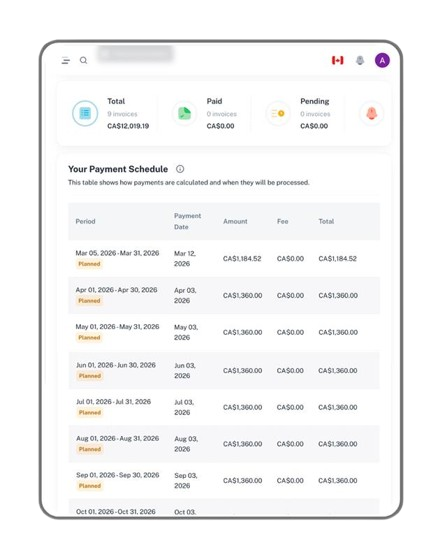
Royal Invest helps landlords and property managers collect rent online, send automatic reminders, generate invoices, and track every payment in real time. Tenants can pay by bank transfer or card, either manually or through automatic payments.
Instead of managing e-Transfers, cash payments, and scattered records, landlords get a clear payment history, direct bank payouts, and fewer late payments through one secure platform built for landlords in Canada and the US.
Also read:
- Why Online Rent Collection Is Replacing Traditional Payment
- Reliable Rent Collection System For Your Properties
- Prorated Rent: How To Calculate And Collect
FAQ
Is online rent collection safer than cash or checks?
Yes. Online rent collection platforms use security measures such as encryption, fraud monitoring, and secure payment processing to protect both landlords and tenants. Cash can be lost or stolen, while checks expose bank account information and can be altered or intercepted.
Can tenants safely pay rent with a credit card or bank transfer?
In most cases, yes. Secure rent collection platforms use protected payment gateways and encrypted transactions to keep financial information safe. Bank transfers are generally preferred for recurring rent payments because they are reliable, trackable, and reduce the risk of missed payments.
What should landlords look for in a secure rent collection platform?
Landlords should look for features such as SSL encryption, multi-factor authentication, automatic payment receipts, fraud detection, audit trails, and direct bank payouts. A platform designed specifically for landlord rent collection usually offers stronger protections than generic payment apps.
Are apps like Venmo or Zelle good for collecting rent?
They may work for occasional payments, but they are not ideal for long-term landlord rent collection. These apps were not designed specifically for rental payments and often lack detailed audit trails, built-in lease management tools, and strong dispute resolution systems.
How do digital payment records help landlords and tenants?
Digital records create a clear history of every rent payment, including the amount, payment date, and processing status. This helps resolve disputes quickly, simplifies accounting and tax reporting, and gives tenants proof of payment without relying on paper receipts.




Leave a Reply