

Table of Contents
An applicant who doesn’t quite clear the bar, income just under the usual threshold, a thin or nonexistent credit file, a first-time renter with nothing to compare against, isn’t automatically a decline. Adding a co-signer or guarantor can bridge that gap.
But the two roles aren’t interchangeable, and requiring one for the wrong reason can create more risk than it solves, including exposure to a human-rights complaint. This guide covers the legal difference between a co-signer and a guarantor, when each one makes sense, and how to screen them properly instead of just collecting a second signature.
Key Takeaways
- A co-signer is on the lease as a co-tenant and is liable for rent from day one; a guarantor signs a separate agreement and only becomes liable if the tenant defaults.
- Landlords can generally require a co-signer or guarantor when an applicant doesn’t meet objective screening criteria, but the trigger needs to be applied consistently, not selectively.
- A co-signer or guarantor should go through the same credit and income verification as the primary applicant; a signature alone proves nothing about their ability to pay.
- Common triggers include no established credit history, an income-to-rent ratio below the standard threshold, or a thin credit file, not a protected characteristic.
- A Royal Invest tenant credit check can be run on a co-signer or guarantor in the exact same way as the primary applicant, so neither party is screened less rigorously than the other.
SCREEN EVERY SIGNATURE THE SAME WAY
Don’t Let a Guarantor Skip the Credit Check
A co-signer or guarantor carries real financial responsibility for the lease, they deserve the same credit and income review as the primary applicant, run through the exact same process.
Co-Signer vs. Guarantor: What’s the Legal Difference?
The two terms get used interchangeably in everyday conversation, but they carry different legal weight:
| Co-Signer | Guarantor | |
| On the lease? | Yes, as a co-tenant | No, signs a separate agreement |
| Liable from | Day one, jointly with the tenant | Only after the tenant defaults |
| Landlord pursues | Either party immediately | Generally, the tenant first |
| Right to occupy | Usually yes | No |
That distinction matters for enforcement: a co-signer can be pursued for missed rent as readily as the tenant themselves, while a guarantor’s obligation is contingent on the tenant failing first. Most landlords find a co-signer the more straightforward arrangement to collect against, which is one reason it’s more commonly used in practice.
When It Makes Sense to Require One
- An applicant has no established credit history, common for students, newcomers to Canada, or very young renters.
- Income falls just under the standard income-to-rent threshold, but the rest of the application is otherwise strong.
- Credit history is thin rather than negative, not enough data to assess risk either way.
- Several applicants are applying jointly, and only one of them individually meets the screening criteria.
A co-signer or guarantor can only meaningfully reduce risk if they themselves are creditworthy. Note that a guarantor is a normal part of qualifying an applicant who doesn’t yet have an established credit file, but the guarantor still needs to be assessed, not simply added as a formality.
When It Doesn’t and the Human-Rights Risk
Requiring a guarantor selectively or applying it more often to applicants of a particular background, income source, or family status, creates real legal exposure. A student legal clinic guide confirms landlords can require a guarantor, but screening criteria need to be based on objective, consistently applied measures, not applied more readily to some applicants than others. The same human-rights guidance that applies to income screening generally applies here: document why a guarantor was requested and apply the same standard to every applicant in a comparable position.
SCREEN EVERY SIGNATURE THE SAME WAY
Don’t Let a Guarantor Skip the Credit Check
A co-signer or guarantor carries real financial responsibility for the lease, they deserve the same credit and income review as the primary applicant, run through the exact same process.
Screening a Co-Signer or Guarantor Properly
Treat a co-signer or guarantor application the same way as the primary tenant’s: pull a credit report, verify income, and check rental history where applicable. A signature with no underlying verification doesn’t reduce risk; it just adds a name to chase if something goes wrong.
- Run the same credit check and income verification used on the primary applicant.
- Give the co-signer or guarantor a full copy of the lease before they sign; they’re responsible for its terms, so they should see all of them.
- Put the agreement in writing. A verbal guarantee is generally not enforceable.
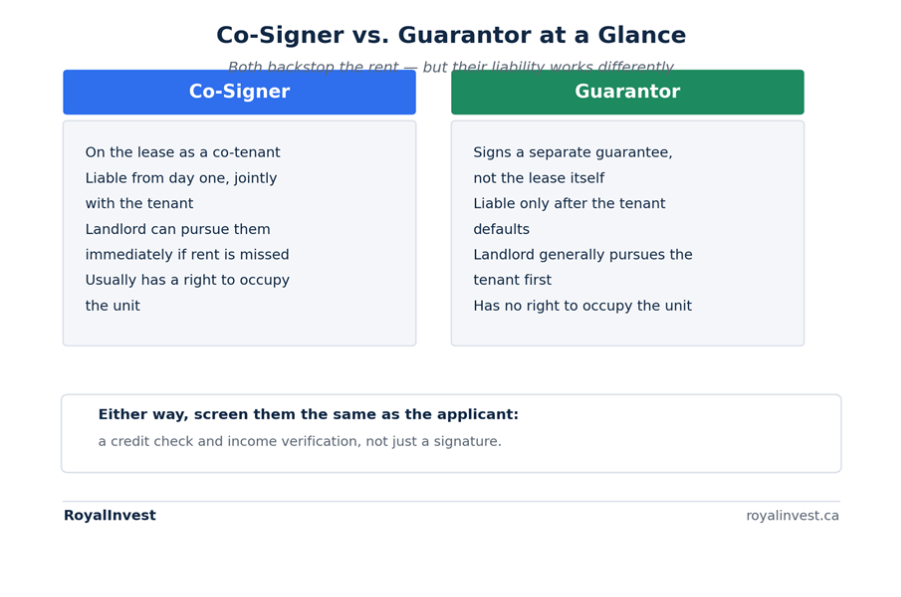
Figure 1: Co-signer and guarantor liability compared side by side.
Drafting the Agreement
Whether using a co-signer clause within the lease or a separate guaranteed document, a few elements keep the agreement enforceable:
- Specify the scope: whether the guarantee covers the full lease term only, or extends automatically to renewals.
- State clearly whether liability is joint and several, meaning the landlord can pursue either party for the full amount owed.
- Have the agreement signed and dated, with a copy retained by both the guarantor and the landlord.
This isn’t legal advice, and requirements vary by province: a lawyer or paralegal familiar with local landlord-tenant law is the right source for the exact wording a jurisdiction requires.
Worth a Look:
- Debt-to-Income Ratio: What It Tells a Landlord Beyond the Credit Score
- What Counts as Proof of Income on a Rental Application
- Monthly Rent Collection Workflows For Property Managers
How Royal Invest Takes the Guesswork Out of This
It’s tempting to treat a co-signer or guarantor as a formality, a name and a signature, added quickly at the end of an application that’s otherwise been fully reviewed. That shortcut is exactly how a co-signer with weak credit or insufficient income ends up backing up a lease they can’t support if something goes wrong.
A Royal Invest tenant credit check run on a co-signer or guarantor exactly the way it runs on the primary applicant: real bureau credit data, the income-to-rent ratio, and a plain-language PASS/FAIL recommendation, with a consent request sent directly to them. Reviewing a guarantor takes the same few minutes as reviewing the tenant, so there’s no reason to treat it as a lower bar.
Frequently Asked Questions
What’s the difference between a co-signer and a guarantor?
A co-signer is named on the lease as a co-tenant and shares full financial responsibility for rent starting on day one, the same as the primary tenant. A guarantor signs a separate guaranteed agreement rather than the lease itself, and typically only becomes responsible for paying if the tenant defaults. A co-signer is generally easier for a landlord to pursue directly.
Can a landlord require a co-signer or guarantor?
Yes, this is a standard part of tenant screening, particularly for applicants with no established credit history or income below the usual threshold. The requirement needs to rest on objective, consistently applied criteria, however, applying it more often to certain applicants than others, based on a protected characteristic, raises human-rights concerns.
Does a guarantor need their own credit check?
Yes. A guarantor or co-signer is only a meaningful safeguard if they themselves are creditworthy and have sufficient income to cover the rent if needed. Skipping their credit and income verification defeats the purpose of requiring one in the first place, it adds a name to the file without reducing financial risk.
Can a guarantor live outside Canada?
Most landlords prefer a guarantor who resides in Canada, since enforcing an agreement against someone outside the country is considerably more difficult if the tenant defaults. Policies vary by landlord, but a guarantor based locally, with verifiable Canadian income and credit history, is generally the more practical and enforceable option.
What happens to a guarantor’s credit if the tenant misses rent?
If the guarantee is reported to a credit bureau and the guarantor fails to cover a missed payment after being called upon, it can affect their credit file. A co-signer’s situation is more direct: because they’re named on the lease itself, missed rent can appear on their credit history much like it would on the primary tenant’s.




Leave a Reply